

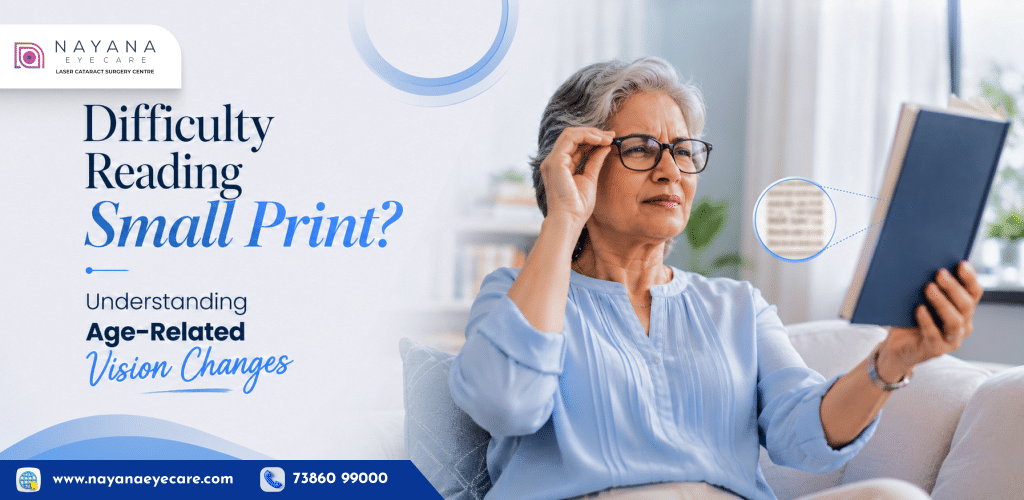
As we grow older, our eyes naturally go through several changes that can affect how clearly we see, especially when it comes to reading small print. These age-related vision changes often develop gradually, which is why many people don’t notice them until everyday tasks like reading a menu or a medicine label start to feel difficult. At Nayana Eye Care, we regularly see patients who assume blurry near vision is just “part of getting old” and nothing more. However, understanding the reasons behind vision changes can help you take timely action and protect your eyesight for years to come.
What Are Age-Related Vision Changes?
Age-related vision changes refer to the natural decline in visual function that occurs as the eyes age. The most common of these is presbyopia, a condition where the eye’s lens gradually loses flexibility, making it harder to focus on close objects.
Common Causes of Age-Related Vision Changes
- Natural stiffening of the eye’s lens over time
- Weakening of the muscles that control focusing
- Reduced tear production, leading to dryness
- Gradual yellowing or clouding of the lens
- Changes in the retina’s light-sensing cells
- Underlying conditions such as diabetes or hypertension
- Prolonged exposure to UV light over the years
- Family history of eye conditions
Symptoms You Should Never Ignore
Since these changes happen slowly, it’s important to watch for symptoms such as:
- Needing to hold reading material farther away
- Blurred vision when reading small print
- Eye strain or headaches after close work
- Difficulty adjusting between near and distant objects
- Increased sensitivity to glare
- Needing brighter light to read comfortably
- Occasional double vision
- Trouble seeing clearly in low light
Additionally, if you notice sudden changes rather than a gradual decline, this could indicate a more serious condition and should not be ignored.
How Are Age-Related Vision Changes Diagnosed?
Diagnosing vision changes typically involves:
- A comprehensive dilated eye examination
- Visual acuity testing for near and distance vision
- Refraction tests to determine the correct lens power
- Tonometry to check for signs of glaucoma
- Retinal examination to rule out other conditions
- Tear film assessment for associated dryness
Therefore, regular eye exams play a key role in catching these changes early, before they significantly affect your daily life.
How Can You Manage Age-Related Vision Changes?
While age-related vision changes cannot be completely prevented, their impact can be managed effectively through:
- Wearing prescribed reading glasses or progressive lenses
- Using adequate lighting while reading or doing close work
- Taking regular breaks during prolonged near work
- Eating a diet rich in antioxidants and eye-friendly nutrients
- Protecting your eyes from UV exposure with sunglasses
- Scheduling annual eye checkups after the age of 40
Moreover, staying proactive about eye health can make a significant difference in maintaining clear, comfortable vision as you age.
When Should You See an Eye Specialist?
You should consult an eye specialist if you experience sudden blurriness, persistent eye strain, frequent headaches, or if your current glasses no longer feel effective. As a result, an early consultation can help rule out other underlying eye conditions that sometimes accompany age-related vision changes.
Conclusion
Vision changes are a natural part of aging, but they don’t have to interfere with your daily life. By recognizing the symptoms early and scheduling regular eye exams, you can continue to enjoy clear, comfortable vision. If you’ve been struggling with small print or near-vision tasks, consult an experienced specialist at a trusted eye hospital in Kakinada for a comprehensive evaluation.