

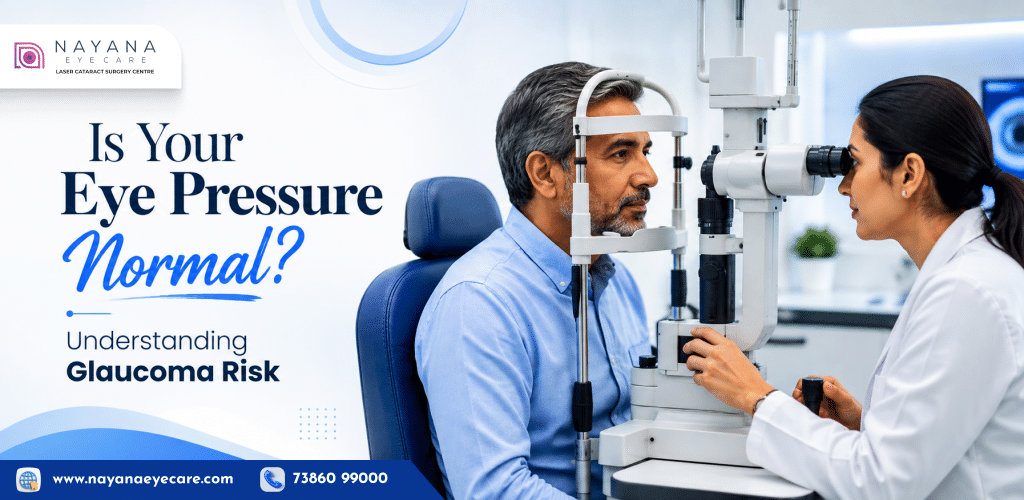
Eye pressure is an important measurement used when assessing overall eye health. Abnormally high eye pressure can increase the risk of glaucoma, a group of eye diseases that can damage the optic nerve. Understanding eye pressure and glaucoma can help you recognize why regular eye examinations are important.
At Nayana Eye Care, specialists use comprehensive eye examinations and diagnostic tests to assess eye pressure and identify individuals who may be at risk of glaucoma.
What Is Eye Pressure?
The eye contains a clear fluid called aqueous humor. The balance between fluid production and drainage helps maintain pressure inside the eye. When fluid does not drain properly, pressure may increase. However, eye pressure alone does not determine whether someone has glaucoma.
What Is Glaucoma?
Glaucoma refers to a group of eye conditions that can damage the optic nerve. The optic nerve carries visual information from the eye to the brain. Glaucoma can progress gradually, and some people may not notice symptoms until significant vision has already been affected.
What Can Increase the Risk of Glaucoma?
Several factors may increase the likelihood of developing glaucoma, including:
- Increasing age
- Family history of glaucoma
- High eye pressure
- Certain medical conditions
- Previous eye injuries
- Severe short-sightedness or other refractive factors
- Long-term use of certain steroid medications
Having a risk factor does not necessarily mean you will develop glaucoma, but regular examinations can be important.
What Are the Warning Signs?
In many cases, glaucoma develops without obvious early symptoms. This makes routine examinations particularly important.
Possible symptoms in advanced disease may include:
- Gradual loss of peripheral vision
- Difficulty seeing in dim lighting
- Blurred vision
- Eye discomfort in some forms
- Severe eye pain and sudden vision changes in acute cases
Sudden severe eye pain, redness, blurred vision, nausea, or vomiting requires urgent medical attention.
How Is Eye Pressure Checked?
During an eye examination, an eye specialist may use tonometry to measure the pressure inside your eyes.
A glaucoma evaluation may also include:
- Visual field testing
- Optic nerve examination
- Retinal imaging
- Gonioscopy when required
- Corneal thickness measurement
- Other specialized tests
These tests provide a more complete picture of glaucoma risk than eye pressure alone.
Can Glaucoma Be Prevented?
Not all cases of glaucoma can be prevented. However, early detection and appropriate treatment can help slow disease progression and protect remaining vision.
You can support your eye health by:
- Attending regular eye examinations
- Following prescribed treatment
- Managing other health conditions
- Informing your doctor about relevant family history
- Avoiding unnecessary use of steroid eye medicines
Why Regular Eye Examinations Matter
Understanding eye pressure and glaucoma is especially important for people with risk factors or a family history of the disease.
Regular examinations allow specialists to:
- Monitor eye pressure
- Examine the optic nerve
- Detect early changes
- Assess visual fields
- Monitor disease progression
- Recommend treatment when necessary
Conclusion
Normal eye pressure does not always mean that your eyes are completely free from glaucoma. A comprehensive examination is important because glaucoma can develop with few noticeable symptoms in its early stages. If you are concerned about eye pressure and glaucoma, consider a comprehensive evaluation at a trusted eye hospital in Kakinada. Early detection and appropriate management can play an important role in protecting your vision.