

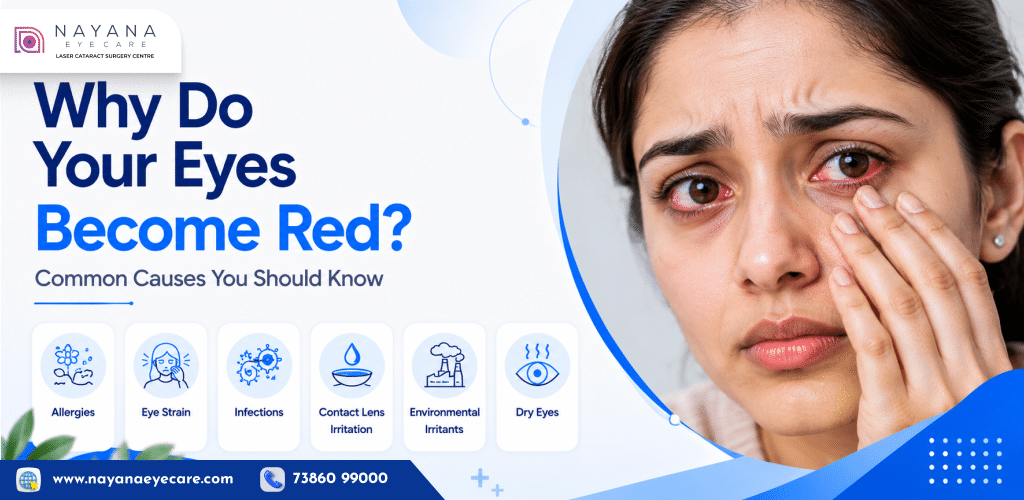
Red eyes are a common eye problem that can happen to people of all ages. The redness may appear after spending long hours looking at screens, due to irritation, allergies, dryness, or an infection. While occasional redness may not always be serious, persistent or painful red eyes should not be ignored. Understanding the possible causes of red eyes can help you know when it is time to consult an eye specialist.
What Causes Red Eyes?
Eye redness occurs when the small blood vessels on the surface of the eye become enlarged or irritated. Several factors can cause this change.
Common causes include:
- Eye dryness
- Allergies
- Dust or smoke exposure
- Lack of sleep
- Prolonged screen use
- Eye infections
- Contact lens irritation
- Minor eye injuries
The cause of redness can vary depending on other symptoms you may experience.
Common Causes of Red Eyes
Dry Eyes
When the eyes do not produce enough tears or tears evaporate too quickly, the surface of the eye can become dry and irritated.
Dry eyes may cause:
- Redness
- Burning sensation
- Gritty feeling
- Watery eyes
- Temporary blurred vision
Taking regular screen breaks and following appropriate eye-care advice may help reduce discomfort.
Eye Allergies
Allergies can cause redness along with itching and watering. Dust, pollen, pet dander, and other allergens may trigger eye irritation. Avoid rubbing your eyes, as this can increase irritation.
Eye Infections
Certain infections can cause significant redness and may be accompanied by discharge, swelling, or discomfort.
Symptoms may include:
- Redness
- Watery eyes
- Sticky discharge
- Swollen eyelids
- Irritation
- Sensitivity to light
If an infection is suspected, an eye specialist should evaluate the condition.
Prolonged Screen Use
Spending long periods looking at computers, smartphones, or other digital screens can contribute to eye strain and dryness.
The symptoms may include:
- Red eyes
- Burning
- Eye fatigue
- Difficulty focusing
- Headaches
Following the 20-20-20 rule and taking regular breaks can help reduce digital eye strain.
When Should You See an Eye Specialist?
Occasional mild redness may improve with rest, but certain symptoms require professional evaluation.
Consult an eye specialist if you experience:
- Persistent redness
- Severe eye pain
- Sudden changes in vision
- Significant sensitivity to light
- Eye swelling
- Thick or unusual discharge
- Redness following an eye injury
- Sudden vision loss
Sudden vision changes or severe eye pain require urgent medical attention.
How Is the Cause of Redness Diagnosed?
An eye specialist may examine the surface of your eye and ask about your symptoms and medical history.
Depending on the suspected cause, the examination may include:
- Visual acuity testing
- Slit-lamp examination
- Eye pressure measurement
- Corneal examination
- Retinal evaluation when required
Identifying the underlying cause helps determine the appropriate treatment.
How Can You Prevent Eye Redness?
Simple eye-care habits can help reduce avoidable irritation.
Try to:
- Take regular breaks from screens.
- Avoid rubbing your eyes.
- Keep your hands clean.
- Get adequate sleep.
- Protect your eyes from dust and smoke.
- Follow proper contact lens hygiene.
- Maintain regular eye examinations.
If redness keeps returning, consult an eye specialist rather than repeatedly using eye drops without professional advice.
Why Timely Eye Care Matters
Persistent red eyes can sometimes be associated with conditions that require medical treatment. Ignoring pain, discharge, or changes in vision may delay appropriate care. Early evaluation can help identify the cause and protect your vision.
Why Choose an Eye Hospital in Kakinada?
Comprehensive eye evaluation is important when redness persists or is accompanied by other symptoms. Choosing a best eye hospital in Kakinada with experienced ophthalmologists and appropriate diagnostic technology can help identify and manage different eye conditions. Nayana Eye Care provides comprehensive ophthalmology services, including cornea, retina, glaucoma, cataract, LASIK, and pediatric eye care.
Conclusion
Red eyes can result from simple causes such as dryness, allergies, lack of sleep, or screen-related eye strain, but persistent redness may sometimes indicate an eye condition that requires attention. If red eyes continue, become painful, or are associated with discharge or vision changes, consult an eye specialist for proper evaluation. Choosing a best eye hospital in Kakinada can help you receive appropriate diagnosis and treatment to protect your eye health.