

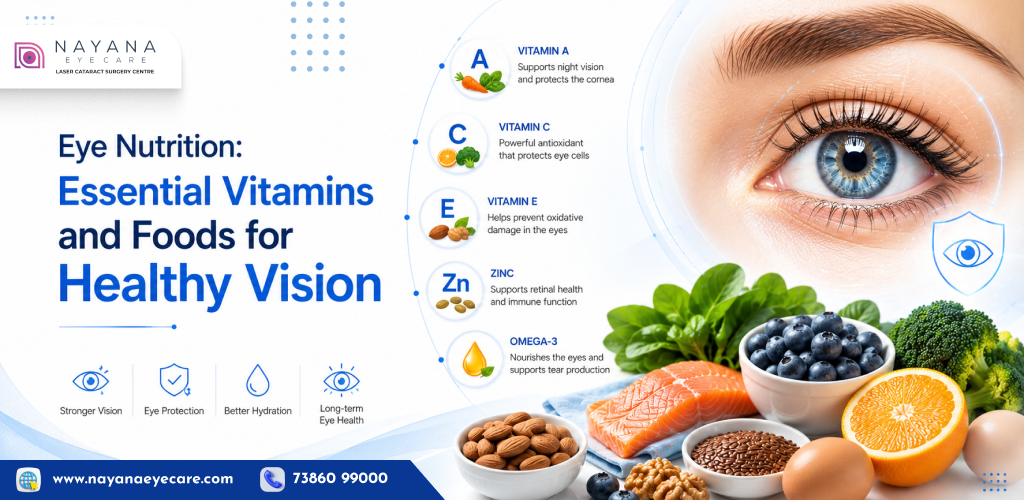
Good nutrition plays an important role in maintaining overall health, including the health of your eyes. A balanced diet provides essential vitamins, minerals, antioxidants, and other nutrients that support normal eye function. Following good eye nutrition habits can be especially helpful as part of a healthy lifestyle. Including a variety of fruits, vegetables, whole grains, proteins, and healthy fats in your diet can support your eyes and overall well-being.
Why Is Eye Nutrition Important?
Your eyes need several nutrients to function properly. A balanced diet can help provide the building blocks your body needs to support healthy eye tissues.
Good nutrition can help:
- Support normal eye function
- Provide important antioxidants
- Support the retina and other eye tissues
- Promote overall health
- Reduce nutritional deficiencies
Nutrition is only one part of eye care and does not replace regular eye examinations.
Essential Vitamins for Healthy Eyes
Several vitamins and nutrients are important for maintaining eye health.
Vitamin A
Vitamin A supports normal vision and helps maintain the health of the cornea.
Food sources include:
- Carrots
- Sweet potatoes
- Spinach
- Pumpkin
- Eggs
- Dairy products
Vitamin C
Vitamin C is an antioxidant found in many fruits and vegetables.
Good sources include:
- Oranges
- Guava
- Amla
- Strawberries
- Bell peppers
- Tomatoes
Vitamin E
Vitamin E provides antioxidant support and can be obtained from a variety of foods.
Sources include:
- Almonds
- Sunflower seeds
- Peanuts
- Vegetable oils
- Avocados
Foods That Support Eye Health
A varied diet can provide several nutrients that support healthy vision.
Consider including:
- Leafy green vegetables
- Colourful fruits and vegetables
- Eggs
- Fish
- Nuts and seeds
- Whole grains
- Legumes
- Dairy products
Eating a variety of foods is generally more beneficial than depending on a single food for eye health.
Omega-3 Fatty Acids and Eye Health
Omega-3 fatty acids are healthy fats that can be obtained from foods such as certain fish, walnuts, and seeds.
Some sources include:
- Salmon
- Sardines
- Mackerel
- Walnuts
- Flaxseeds
- Chia seeds
A balanced diet that includes healthy fats can support overall health and may also contribute to healthy eyes.
Healthy Eating Habits for Better Vision
Good dietary habits are an important part of eye nutrition.
You can support a balanced diet by:
- Eating a variety of colourful vegetables and fruits.
- Choosing whole grains when possible.
- Including healthy sources of protein.
- Drinking enough water.
- Limiting highly processed foods.
- Avoiding excessive sugary foods and drinks.
- Including healthy fats in appropriate amounts.
People with specific medical conditions should follow dietary advice provided by their healthcare professional.
Can Food Prevent Eye Problems?
A healthy diet can support eye health, but nutrition alone cannot prevent or treat every eye condition. Problems such as cataracts, glaucoma, retinal diseases, and refractive errors may require professional evaluation and treatment.
Regular eye examinations remain important, especially if you have diabetes, a family history of eye disease, or existing vision problems.
When Should You See an Eye Specialist?
Diet is only one part of maintaining healthy vision. Consult an eye specialist if you experience:
- Persistent blurred vision
- Sudden changes in vision
- Eye pain
- Flashes or new floaters
- Difficulty seeing at night
- Double vision
- Sudden loss of vision
Sudden vision loss or severe eye pain requires urgent medical attention.
Why Regular Eye Examinations Matter
Even people who eat a healthy diet may develop eye conditions without obvious early symptoms. Comprehensive eye examinations can help detect certain problems before they significantly affect vision.
Combining a balanced diet with regular eye checkups, healthy lifestyle habits, and appropriate treatment can support long-term eye health.
Conclusion
A balanced diet provides important nutrients that support healthy eyes and overall well-being. Including vegetables, fruits, fish, nuts, seeds, whole grains, and other nutritious foods can contribute to good eye nutrition and a healthy lifestyle.
If you have concerns about your vision or eye health, do not rely on diet alone. Regular examinations by an eye specialist can help identify problems early. For professional eye care and guidance, you can consult the best eye hospital in Kakinada for personalized advice.