

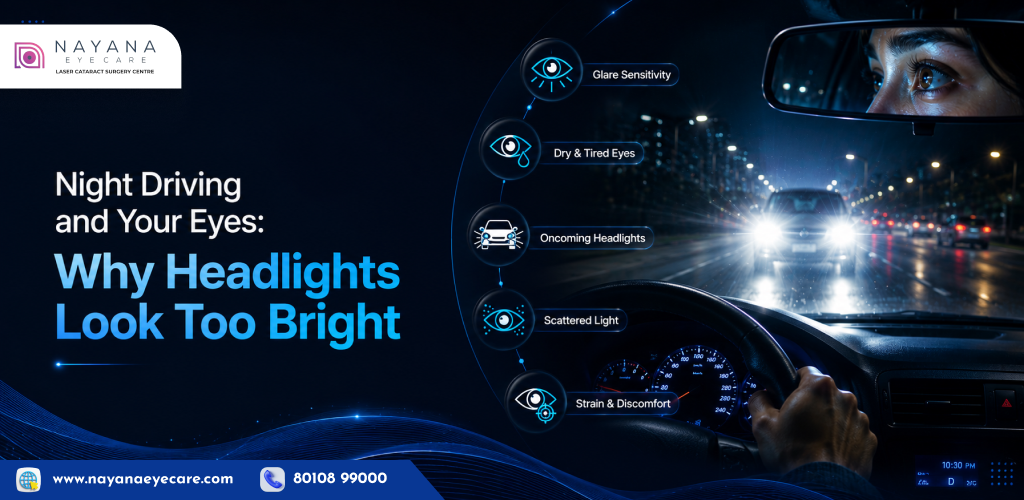
Driving at night can become difficult when headlights, streetlights, and other bright sources appear unusually strong or create glare. For some people, this may simply be due to the normal difference between bright lights and a dark environment. However, frequent difficulty seeing clearly at night may sometimes indicate an underlying eye problem. Understanding why night driving vision problems occur can help you recognize when it may be time for an eye examination. Conditions such as refractive errors, dry eye, cataracts, and other eye problems can affect how your eyes handle bright lights in the dark.
Why Do Headlights Look Too Bright at Night?
At night, your surroundings are darker, so bright headlights can create a stronger contrast. This can make glare more noticeable.
Headlights may appear unusually bright because of:
- Refractive errors
- Dry eyes
- Cataracts
- Astigmatism
- Dirty or scratched eyeglasses
- Eye fatigue
- Certain eye conditions
Occasional glare may not indicate a serious problem, but frequent difficulty should be evaluated.
Refractive Errors and Night Glare
Myopia, hyperopia, and astigmatism can affect how light focuses on the retina. When vision is not properly corrected, headlights may appear blurry, stretched, or surrounded by halos.
An updated eye examination can help determine whether your glasses or contact lens prescription needs adjustment.
How Dry Eyes Can Affect Night Driving
Dry eyes can make the surface of the eye uneven, which may affect the way light enters the eye. This can make glare and blurred vision more noticeable at night.
Dry eye symptoms may include:
- Burning or stinging
- Gritty feeling
- Redness
- Temporary blurred vision
- Increased sensitivity to light
- Watery eyes
Taking regular screen breaks and following appropriate eye-care advice may help reduce discomfort.
Can Cataracts Cause Headlight Glare?
Cataracts cause clouding of the natural lens of the eye. They can gradually affect vision and make bright lights particularly uncomfortable.
People with cataracts may experience:
- Increased glare from headlights
- Halos around lights
- Cloudy vision
- Difficulty seeing at night
- Faded colours
- Increased sensitivity to light
If these symptoms interfere with driving or daily activities, an eye specialist should evaluate your vision.
Tips for Safer Night Driving
If bright headlights are affecting your comfort while driving, consider the following:
- Keep your windshield clean.
- Make sure your headlights and mirrors are clean.
- Wear your prescribed glasses if required.
- Avoid looking directly at oncoming headlights.
- Reduce your speed when visibility is poor.
- Take breaks if your eyes feel tired.
- Avoid driving when your vision feels unusually blurred.
These habits may improve comfort, but persistent vision problems should still be checked.
When Should You See an Eye Specialist?
Consult an eye specialist if you frequently experience:
- Difficulty seeing while driving at night
- Strong glare from headlights
- Halos around lights
- Persistent blurred vision
- Double vision
- Eye pain
- Sudden changes in vision
- Increasing sensitivity to light
Sudden loss of vision or severe eye pain requires immediate medical attention.
How Is Night Vision Evaluated?
An eye specialist may perform a comprehensive examination to understand why you are experiencing difficulty at night.
Depending on your symptoms, the examination may include:
- Visual acuity testing
- Refraction and eye power assessment
- Slit-lamp examination
- Eye pressure measurement
- Retinal examination
- Additional tests when required
The appropriate evaluation helps identify whether the problem is related to your prescription, eye surface, lens, retina, or another part of the eye.
Why Timely Eye Care Matters
Difficulty seeing at night should not always be dismissed as a normal part of ageing or driving. Persistent glare can sometimes be associated with an eye condition that requires attention.
Getting an eye examination when symptoms continue can help identify the cause and support better vision and safer daily activities.
Conclusion
Night driving vision problems can occur for several reasons, including refractive errors, dry eyes, astigmatism, and cataracts. Occasional glare may be normal, but persistent difficulty seeing clearly at night should not be ignored.
If night driving vision problems are affecting your comfort or safety, consult an eye specialist for a comprehensive examination. For professional eye evaluation and treatment, you can visit the best eye hospital in Kakinada for personalized eye care.