

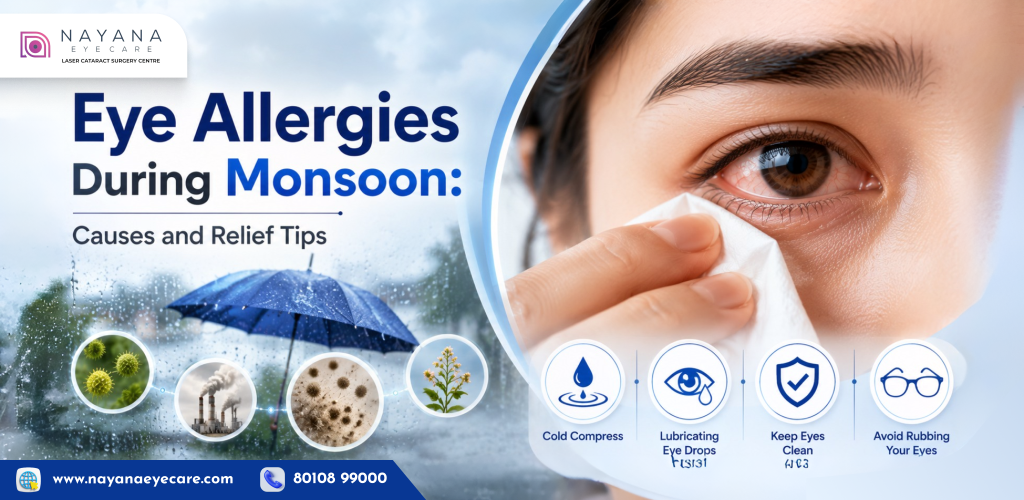
Monsoon brings relief from the summer heat, but for many people, the rainy season also brings itchy, red, watery, and irritated eyes. Increased humidity, dust, pollen, and exposure to pollutants can trigger eye allergies and make everyday activities uncomfortable. If your eyes constantly itch, burn, water, or feel swollen during the rainy season, you may be dealing with an eye allergy. At Nayana Eye Care, we help patients identify the cause of their symptoms and provide appropriate Eye Allergy Treatment in Kakinada.
Why Are Eye Allergies Common During Monsoon?
Changes in humidity and weather conditions can increase exposure to allergens. Dust, pollen, mold, and other particles can irritate the sensitive surface of the eyes.
Common triggers include:
- Increased humidity
- Mold and fungal growth
- Dust and pollution
- Pollen
- Rainwater contamination
- Poor environmental hygiene
For people who are already sensitive to these allergens, symptoms can become worse during the monsoon season.
Common Symptoms of Eye Allergies
Eye allergies can make it difficult to concentrate on work, use digital devices, or enjoy outdoor activities.
Watch for symptoms such as:
- Persistent itching
- Red or swollen eyes
- Excessive watering
- Burning or irritation
- Sensitivity to light
- A gritty or uncomfortable feeling
- Watery or stringy eye discharge
If these symptoms continue or keep returning, seeking Eye Allergy Treatment in Kakinada can help identify the trigger and manage the condition effectively.
Eye Allergy vs Eye Infection: Why It Matters
Eye allergies may cause:
- Intense itching
- Watery eyes
- Redness
- Swelling
- Symptoms in both eyes
On the other hand, eye infections may cause:
- Significant redness
- Sticky or colored discharge
- Eye pain
- Swelling
- Sensitivity to light
- Vision changes
Because the symptoms can overlap, avoiding self-medication and getting an examination from an eye specialist is important.
How Eye Allergies Affect Your Daily Life
Ignoring allergy symptoms can make simple activities frustrating. Constant itching may tempt you to rub your eyes, while watering and redness can interfere with work, driving, reading, or using screens.
Repeated eye rubbing can also increase irritation and make symptoms worse.
If seasonal symptoms are affecting your routine, professional Eye Allergy Treatment in Kakinada can help you understand the underlying cause and choose an appropriate treatment plan.
How to Get Relief from Eye Allergies
Simple precautions can reduce exposure to common allergens and help control symptoms.
Avoid Rubbing Your Eyes
Rubbing may provide temporary relief but can increase irritation and redness. Try to keep your hands away from your eyes.
Keep Your Hands Clean
Wash your hands regularly, particularly before touching your face or eyes.
Protect Your Eyes Outdoors
Wear protective glasses when going outside, especially in areas with dust or pollution.
Keep Your Surroundings Clean
Reduce dust and moisture buildup at home. Proper ventilation can also help minimize exposure to allergens.
Use Eye Drops Only as Recommended
Do not use random or leftover eye drops without medical advice. The appropriate drops depend on the underlying cause of your symptoms.
When Should You See an Eye Specialist?
You should consult an eye specialist if:
- Eye itching continues for several days
- Redness keeps returning
- Your eyes become significantly swollen
- You experience persistent watering
- You develop eye pain
- Your vision becomes blurred
- Symptoms do not improve with basic precautions
A timely examination can help distinguish an allergy from an infection or another eye condition.
How Is Eye Allergy Diagnosed?
Your eye specialist will evaluate your symptoms, eye health, and possible triggers. Depending on your condition, the examination may include:
- Visual acuity testing
- Examination of the eye surface
- Assessment of redness and swelling
- Evaluation for infection or other eye conditions
- Review of your medical and allergy history
Based on the findings, your specialist can recommend suitable Eye Allergy Treatment in Kakinada.
How Can You Prevent Monsoon Eye Allergies?
You may not be able to avoid every allergen, but a few habits can reduce your risk:
- Avoid touching your eyes with unwashed hands.
- Keep towels and pillowcases clean.
- Avoid sharing towels or eye cosmetics.
- Reduce exposure to dust and mold.
- Wear protective eyewear outdoors.
- Keep contact lenses clean and follow proper lens-care instructions.
- Avoid using someone else’s eye drops.
- Seek medical advice when symptoms persist.
Conclusion
Itchy, red, and watery eyes may seem like minor problems, but persistent symptoms can affect your comfort and daily routine. During monsoon, increased humidity, dust, pollen, and mold can make eye allergies more common.
If your symptoms continue or keep returning, don’t simply tolerate the discomfort or self-medicate. Professional Eye Allergy Treatment in Kakinada can help identify the cause and provide appropriate care.
At Nayana Eye Care, our specialists provide personalized evaluation and treatment for eye allergies and other seasonal eye problems. If monsoon allergies are affecting your eyes, schedule an eye examination and take the right step toward comfortable, healthy vision.